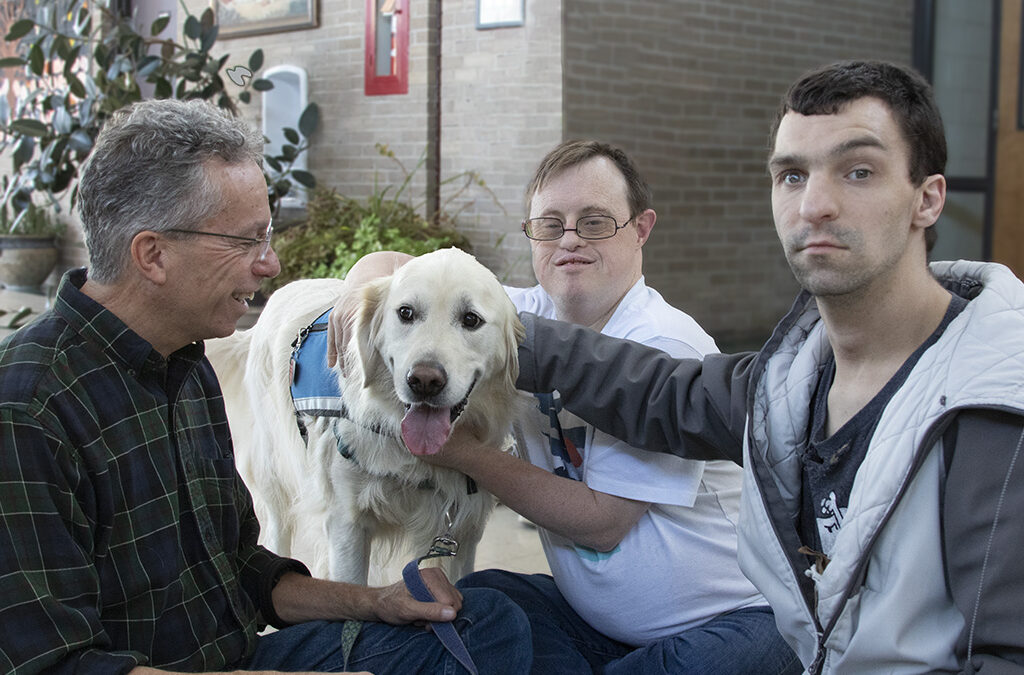
Since 2013, therapy dogs have brought comfort, companionship, and countless smiles to the residents of St. Louis Center. What began as occasional visits has grown into a meaningful and anticipated part of life for many individuals with intellectual and developmental disabilities. The gentle presence of these specially trained dogs offers far more than entertainment—it provides emotional support, encourages social interaction, and creates moments of calm, joy, and connection.
For many residents, pet therapy days are among the highlights of the week. The excitement begins long before the dogs arrive. Residents gather eagerly, asking questions, sharing stories about pets they once had, and waiting patiently for their turn to pet, hug, or sit beside the visiting animals. The dogs, accompanied by trained handlers, move naturally through the rooms, offering affection without judgment and companionship without expectation.
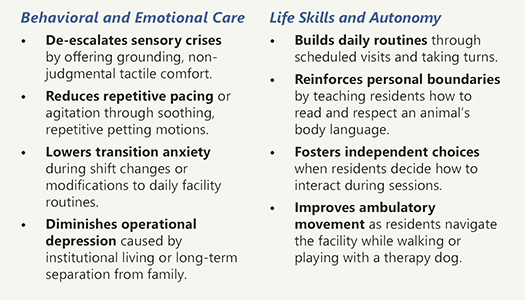 While the interactions may appear simple on the surface, the benefits of pet therapy are significant. Research has shown that spending time with therapy animals can reduce stress and anxiety, lower blood pressure, improve mood, and encourage communication. At St. Louis Center, staff members often notice residents becoming more engaged and expressive during visits. Individuals who are normally quiet may begin talking or smiling more. Others who struggle with social interaction often become more comfortable participating in conversations when a dog is nearby.
Pet therapy can also encourage physical movement and sensory engagement. Residents practice gentle motor skills while brushing a dog’s fur, throwing a toy, or carefully offering treats. For some individuals, the calming rhythm of petting a dog can help regulate emotions and provide reassurance during difficult moments.
Perhaps most importantly, therapy dogs create opportunities for unconditional connection. The dogs do not focus on disabilities, limitations, or challenges. They simply respond to kindness, attention, and affection. That acceptance can be incredibly meaningful for individuals who may struggle with communication or emotional expression.
Over the years, many special bonds have formed between residents and the visiting dogs. Some residents remember the dogs’ names and personalities from visit to visit, greeting them like old friends. Others light up at the chance to sit quietly beside a calm companion, enjoying a peaceful moment together. Even residents who are hesitant at first often gradually warm up, eventually reaching out for a gentle pat or leaning in close for comfort.
The success of the program reflects the dedication of the volunteers and handlers who generously share their time and their animals with the St. Louis Center community. Their commitment has helped make pet therapy an important part of the Center’s therapeutic and recreational programming for more than a decade.
For individuals with intellectual and developmental disabilities, meaningful human connection is essential—but sometimes healing and happiness also arrive on four paws. At St. Louis Center, the therapy dogs have become more than visitors. They are trusted companions, loyal friends, and a reminder that comfort can often be found in the simplest moments: a wagging tail, a gentle nuzzle, and the unconditional love of a dog.
Since 2013, St. Louis Center has benefited from partnerships with a variety of pet therapy programs and dedicated volunteers who have shared their time and animals with residents. Today, Therapaws Pet Therapy continues that legacy, helping create meaningful moments of joy and emotional support throughout the community.
Read the entire issue of St. Louis Spirit here!