Inner Rhythm Music Therapy
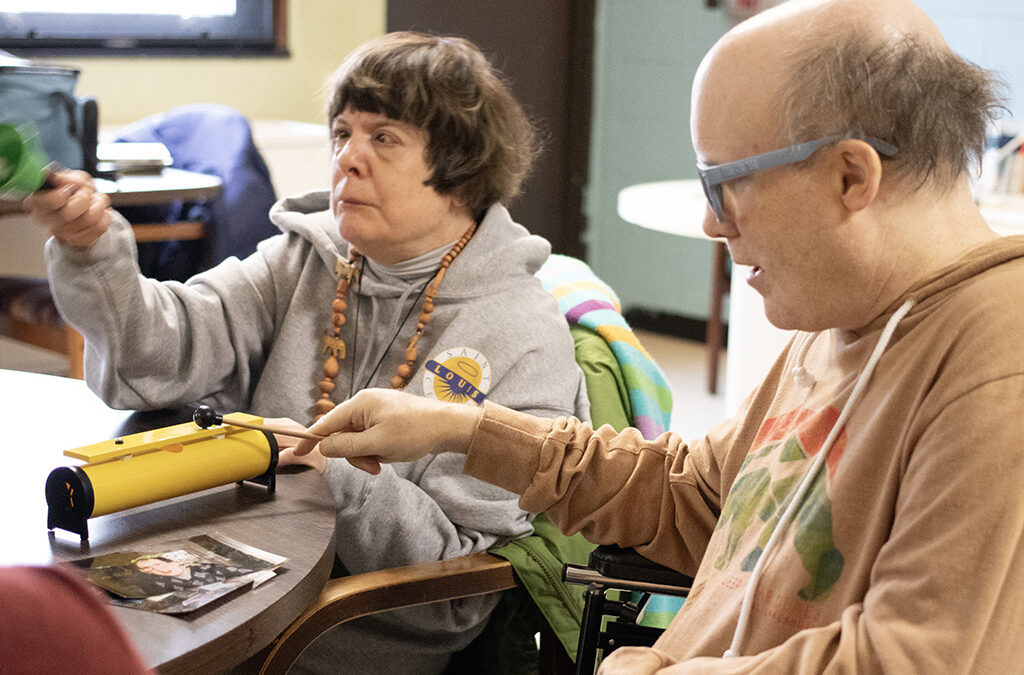
On Monday mornings at St. Louis Center, the sound of music signals more than just a pleasant start to the week—it marks a time of connection, growth, and joy. For the past two years, music therapist Renae from Harmony Garden Music Therapy Services has been a familiar and welcome presence, working with residents through structured group sessions and individualized therapy that support their emotional, social, cognitive, and physical well-being.
Harmony Garden Music Therapy Services, based in Jackson, MI, is celebrating its 20th anniversary this year. The organization has provided music therapy services at St. Louis Center for over 10 years, even continuing creatively during the challenges of the COVID-19 pandemic. Renae Murphy, who is approaching her tenth year as a professional music therapist, brings both clinical expertise and deep personal commitment to her work.
Science, Artistry, and Caring
Music therapy is far more than singing songs or shaking instruments. From a clinical standpoint, each session is guided by individualized goals and objectives. At St. Louis Center, many of those goals focus on social-emotional development—skills such as turn-taking, effective communication, shared attention, and cooperation. Residents also work on fine and gross motor skills through instrument play, cognitive skills through songwriting and memory-based activities, and self-expression through improvisation and movement.
Renae typically spends four hours at St. Louis Center each Monday, rotating through three 30-minute group sessions and then working individually with several residents. These individual sessions allow for deeper focus on personal goals and strengths, whether that means practicing guitar, playing piano, or simply engaging one-on-one in music-based interaction. Every instrument is carefully cleaned between sessions, underscoring the professionalism and care that define the work.
The Powerful Impact
The impact of music therapy is often immediately visible. Residents who may be hesitant to engage in other activities often join in when music is involved. Peer participation encourages involvement, and familiar rhythms and melodies help individuals remain focused and present. Staff frequently note increased communication, improved attention to task, and a noticeable lift in mood on days when music therapy is offered. As Renae shared, she often hears, “We’re so happy you’re here—everyone’s excited.”
Music therapy also honors each person’s unique preferences and history. Some residents gravitate toward rock music, others delight in music from the 1950s, and some eagerly request classics like Lawrence Welk. These preferences open doors not only to engagement but also to meaningful relationships. For Renae, working with residents has expanded her own musical horizons, connecting generations through shared listening and discovery.
Beyond developmental and social benefits, music therapy plays a powerful role in mental health and emotional regulation. Because music therapists are third-party supports—not parents, teachers, or caseworkers—clients often feel free to simply ‘be’ in the moment. Sessions can be energetic and expressive or quiet and grounding. Sometimes progress looks like singing together; other times, it’s silent presence or instrumental improvisation that helps regulate energy and emotions.
Renae’s Pathway to her Vocation
Becoming a music therapist requires extensive training: a four-year bachelor’s degree, hundreds of observation hours, and a 1,200-hour clinical internship. This rigorous preparation ensures that music therapy is not recreational, but evidence-based and intentional. There are only two universities in Michigan that offer this course of study: Eastern or Western. Renae chose to get her degree from EMU.
In an ideal world, Renae believes individuals with intellectual and developmental disabilities would benefit from music therapy more than once a week. Additional sessions—offered at different times of day to accommodate work and school schedules—could deepen progress and reach more residents. While funding remains a challenge, the value of music therapy is clear: it fosters connection, dignity, creativity, and growth.
As Renae simply put it, “I’m doing exactly what I’m supposed to be doing with my life.” And for the residents at St. Louis Center, the music speaks for itself.
Read the entire issue of St. Louis Spirit here!