
 We are currently living in a global epidemic. It is not an epidemic caused by germs or viruses. It is a crisis of loneliness and social isolation.
The crisis is so severe that in 2023, the former U.S. Surgeon General Vivek Murthy wrote an Advisory on the Healing Effects of Social Connection and Community. The impact of social connection is well-documented. In his report, he warns that loneliness is not just an emotional struggle—it poses serious health risks, increasing the likelihood of heart disease, dementia, stroke, depression, and even premature death. Research indicates that a lack of social engagement is also linked to a higher risk of dementia.
According to peer-reviewed studies found on the National Institutes of Health website and others published by Oxford University Press on behalf of The Gerontological Society of America, loneliness affects nearly half of all U.S. adults, but for people with disabilities, the risk is even higher—they are 1.5 to 2 times more likely to experience chronic isolation. The studies yield similar results around the globe.
How can people hold the world in the palm of their hand, yet be so isolated and alone?
St. Louis Center offers a solution. It is a community of connection. People live in a neighborhood setting, surrounded by others. In addition, there is a never-ending calendar of events to participate in, designed to offer choices for every interest.
Social interaction stimulates cognitive function and helps maintain mental agility. Without regular engagement, the brain may experience accelerated cognitive decline. St. Louis Center strives to provide ‘fullness of life’ for each person regardless of ability, combating the effects of loneliness and isolation to the greatest extent possible.
For more information about these studies, visit: https://tinyurl.com/lonelystudy or https://tinyurl.com/StudyLoneliness
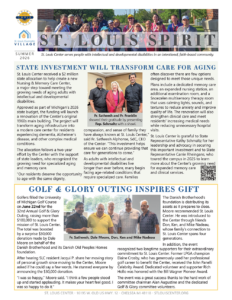
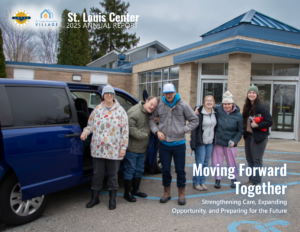
Read the entire issue of St. Louis Spirit here!